Short answer: for building muscle and bone, almost any resistance training works, and you do not need the Olympic lifts. You need them for the other half of aging. Learning a hard, complex movement drives measurable changes in the brain that repetitive exercise does not, and research shows adults in their fifties, sixties, and seventies still get those changes. They just learn slower.
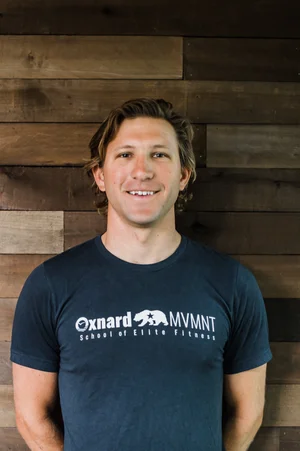
I own two CrossFit gyms in Ventura County, and one of the sharpest questions I get sounds like this: "I understand why I need resistance training. Why do I need to learn something as complicated as a snatch?"
Here's my full answer.
Half one: for lean mass, almost anything works
We lose muscle as we age, and skeletal muscle is one of the strongest protections we have against chronic disease, injury, and losing our independence later in life.
The good news is that this half is not complicated. A meta-analysis of 49 randomized trials found older adults gained roughly 1.1 kg of lean mass over about 20 weeks of resistance training. A separate network meta-analysis of 30 trials in adults aged 60 to 92 compared resistance training, endurance training, and whole-body vibration and found no significant difference between them for lean body mass.
Bands, dumbbells, machines, cables, barbells. They all work. Press something, squat something, pull something off the floor, two or three days a week.
Bone wants more load
Bone responds to meaningful load, which is where a barbell starts to earn its place.
In the LIFTMOR randomized trial, 101 postmenopausal women with an average age of 65, all with osteopenia or osteoporosis, trained twice a week for 30 minutes. Five sets of five above 85% of their one-rep max, using deadlifts, back squats, overhead presses, and jumping chin-ups. After eight months, lumbar spine bone density increased 2.9%, while the control group lost 1.2%.
If lean mass and bone density were the whole problem, you could stop reading here. Lift heavy, twice a week, done.
Half two: the part nobody trains for
We do not only lose muscle as we age. We lose cognitive function. Most people treat that as a separate problem with a separate solution: weights for the body, puzzles for the brain.
The research suggests they are the same problem.
In a 2008 study, adults aged 50 to 67 learned three-ball juggling over three months. Brain scans afterward showed increased gray matter in multiple regions.
The detail that matters most: only 23% of the older learners reached the performance target, compared with 100% of a younger comparison group. They learned dramatically slower. Their brains changed anyway.
One more finding worth sitting with. When participants stopped practicing, the gray matter gains reversed. This is a use-it-or-lose-it system.
Why a snatch is different from a leg press
A 2018 trial took adults aged 63 to 80 and trained them twice a week, 90 minutes a session, for six months. One group did conventional repetitive fitness training: cycling, strength endurance, flexibility. The other group learned progressively harder dance choreography. Intensity was comparable.
The learning group showed larger gray matter increases and was the only group with increased BDNF, a growth factor tied to building and maintaining brain cells.
Same time, same effort. The variable was skill acquisition.
That is the case for the snatch and the clean and jerk. They are not the most efficient way to build muscle. They are the hardest things in the gym to learn, and the difficulty is the point. Every rep is your nervous system building a pathway. You get the muscle and the neurological adaptation from the same hour.
"Isn't that dangerous at my age?"
This is the objection that keeps most people over 45 away from these lifts, and the data does not support the fear.
A systematic review of weightlifting injuries put the rate at 2.4 to 3.3 injuries per 1000 training hours. In the same body of research, American football sits around 9.6, wrestling around 5.7, and track and field at 3.6. Weightlifting is one of the lower-risk athletic activities you can do.
And in LIFTMOR, women averaging 65 years old with diagnosed bone loss lifted above 85% of their max twice a week for eight months, with one reported adverse event: a minor back spasm.
That trial used one word repeatedly: supervised.
That matches how it works in our gyms. Nobody snatches on day one. You start with PVC pipe, then a dowel, then an empty barbell. Weeks on positions before load. If your shoulder does not go overhead, we scale the movement and work on the shoulder. The risk in Olympic lifting is not the barbell. It is the barbell without coaching.
Gymnastics does the same job
If the Olympic lifts are not for you, the principle still holds. A kipping pull-up, toes to bar, a ring dip, a muscle-up. These are skills that teach your nervous system to move your own body through space with precision. Same adaptation, no barbell.
A real example
One of our members, I will call him Danny, has been active his whole life but never lifted seriously until his daughter started CrossFit and he came in with her.
Since then he has been through a few significant medical events. Every time, his doctors have told him he is recovering faster than most people his age.
He is in his early sixties, and he is currently working on his double unders and still chasing the squat snatch. Two of the hardest skills we teach, being practiced by a man most gyms would have quietly steered toward a machine years ago. That is the version of aging we are training for.
The bottom line
For muscle and bone, lift something heavy two or three days a week. Almost any tool will do.
For your brain, you need to be learning something that makes you feel clumsy. The snatch, the clean and jerk, or the pull-up you cannot do yet. You are not too old. You will be slower than the 22-year-old next to you, and the research says slower gets you the same adaptation.
Ready to start? Take our free Foundations Assessment at oxnardmvmnt.com/foundations-assessment, or message me on Instagram at @kolby_krysto. We coach in Oxnard and Ventura and we will start you exactly where you are.
Listen to this week's QuickCast episode for the full conversation. [LINK HERE]